

Date published: TBC
October 1st, 1987, S0758, Christopher Hitchens discusses Latin America and US Foreign Policy. He appears here on Firing Line with William F Buckley Jr.

Date published: TBC
JUNE 12, 1987 - Christopher Hitchens and Jeremy Shearmer discussed politics in the United Kingdom and responded to callers' questions. - New Excerpt Coming

Date published: TBC
FEBRUARY 10, 1987, Mr. Hitchens discussed how politics is being treated in the media and responded to callers' questions.
Date published: TBC
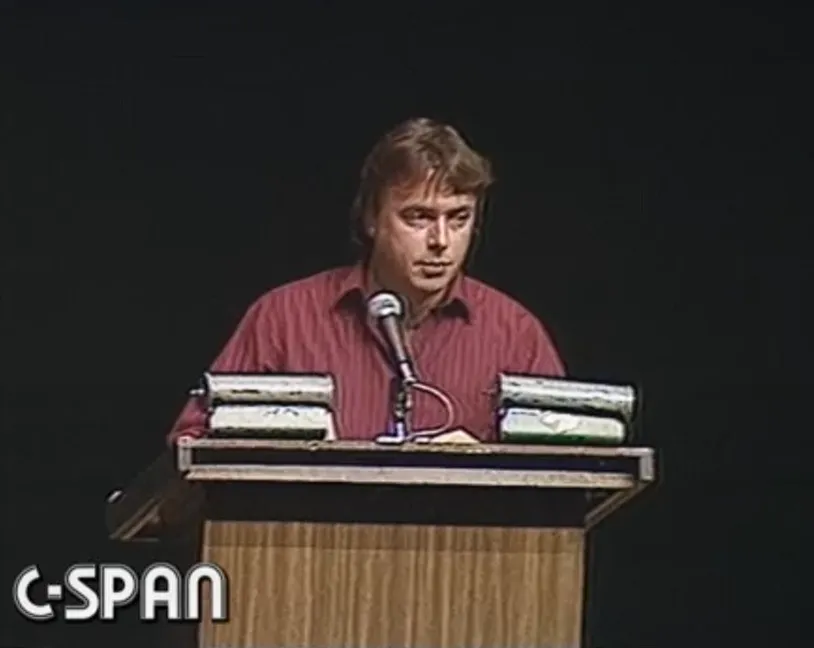
NOVEMBER 11, 1986, Panelists debated socialism versus capitalism, which is the moral system. Panelists also answered audience questions.

Date published: TBC
DECEMBER 24, 1985, Christopher Hitchens discussed political affairs in South Africa and responded to callers' questions.

Date published: TBC
November 12, 1984, Hitchens believed that the American Left had significantly impacted society by initiating the civil rights movement for Black Americans, opposing an unjust war in Indochina, and starting the emancipation of women. He felt that the whole world owed a debt of gratitude to the American Left for these accomplishments. Tyrrell, on the other hand, argued that in the 1960s and 1970s, liberals had achieved most of their goals, such as civil rights and welfare, but then became obsessed with power. He accused them of ignoring their achievements and focusing on gaining more power.

Date published: TBC
NOVEMBER 7, 1983, Christopher Hitchens discussed foreign policy under President Ronald Reagan and daily news headlines.

Date published: TBC
1981, Christopher Hitchens, a prominent author and journalist, frequently wrote and spoke on various subjects, including politics, religion, and literature. In this case, it seems he participated in a discussion with Ludovic Kennedy about British intelligence and James Baldwin. Exact air-date unknown. James Baldwin was an influential African American writer and social critic, known for his novels, essays, and plays that explored themes of race, sexuality, and identity. Baldwin's work often critiqued the social and political landscape of the United States, making him a relevant figure in discussions about intelligence, surveillance, and civil rights.
Date: TBC
October 1st, 1987, S0758, Christopher Hitchens discusses Latin America and US Foreign Policy. He appears here on Firing Line with William F Buckley Jr.
Date: TBC
JUNE 12, 1987 - Christopher Hitchens and Jeremy Shearmer discussed politics in the United Kingdom and responded to callers' questions. - New Excerpt Coming
Date: TBC
FEBRUARY 10, 1987, Mr. Hitchens discussed how politics is being treated in the media and responded to callers' questions.
Date: TBC
NOVEMBER 11, 1986, Panelists debated socialism versus capitalism, which is the moral system. Panelists also answered audience questions.
Date: TBC
DECEMBER 24, 1985, Christopher Hitchens discussed political affairs in South Africa and responded to callers' questions.
Date: TBC
November 12, 1984, Hitchens believed that the American Left had significantly impacted society by initiating the civil rights movement for Black Americans, opposing an unjust war in Indochina, and starting the emancipation of women. He felt that the whole world owed a debt of gratitude to the American Left for these accomplishments. Tyrrell, on the other hand, argued that in the 1960s and 1970s, liberals had achieved most of their goals, such as civil rights and welfare, but then became obsessed with power. He accused them of ignoring their achievements and focusing on gaining more power.
Date: TBC
NOVEMBER 7, 1983, Christopher Hitchens discussed foreign policy under President Ronald Reagan and daily news headlines.
Date: TBC
1981, Christopher Hitchens, a prominent author and journalist, frequently wrote and spoke on various subjects, including politics, religion, and literature. In this case, it seems he participated in a discussion with Ludovic Kennedy about British intelligence and James Baldwin. Exact air-date unknown. James Baldwin was an influential African American writer and social critic, known for his novels, essays, and plays that explored themes of race, sexuality, and identity. Baldwin's work often critiqued the social and political landscape of the United States, making him a relevant figure in discussions about intelligence, surveillance, and civil rights.
