
Date published: TBC
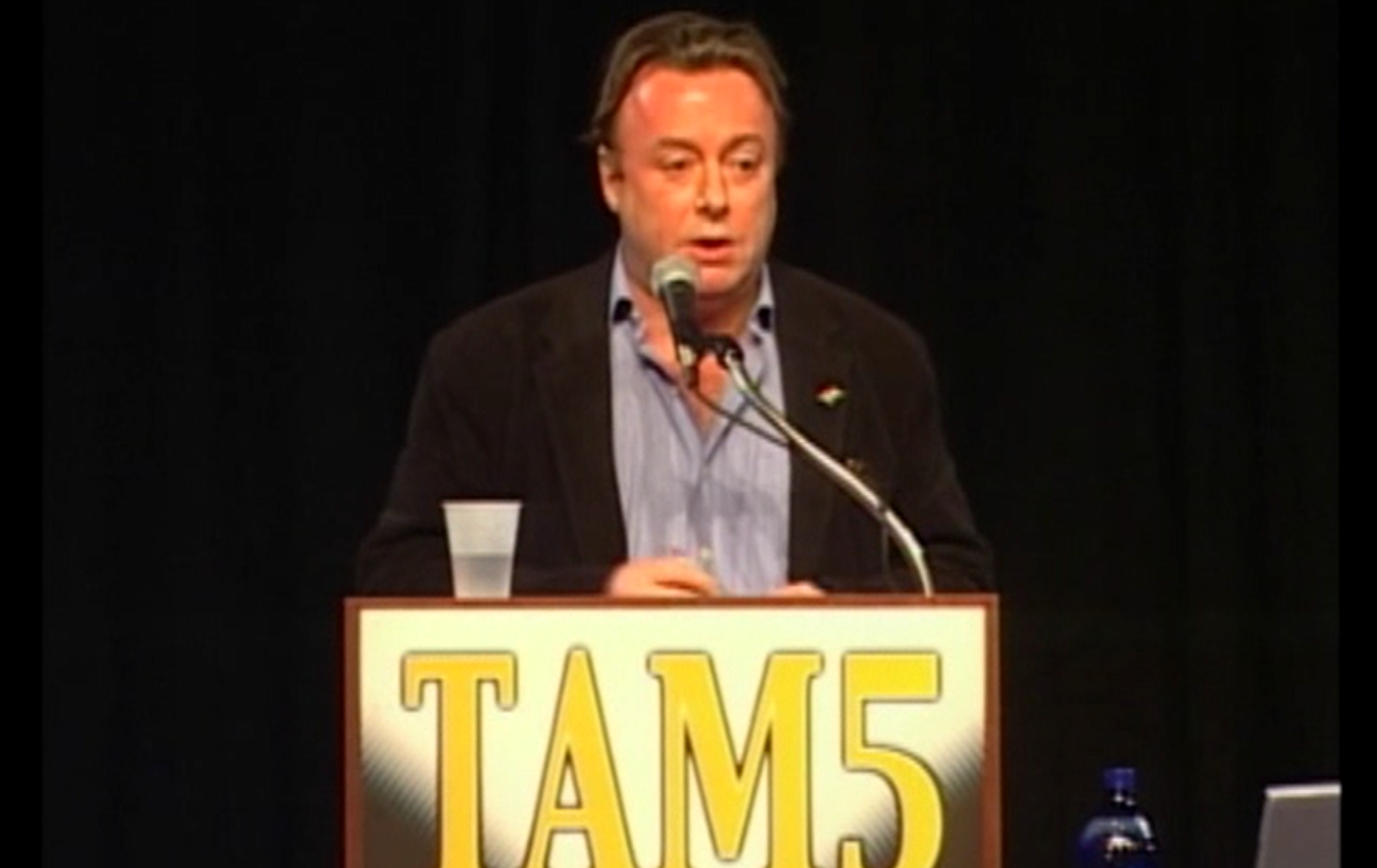
Thank you, Randy, for having me again. I have the impression that people like yourselves come to meetings like this not just to listen, but to talk. Since we only have 45 minutes together, I'll be as brief as I can on my topic and invite your responses. I think I must need to be

Date published: TBC
Every restriction on expression prepares the ground for future repression. From Oliver Wendell Holmes to modern European thought-crime laws, he shows that the suppression of any opinion - however offensive - ultimately endangers all of them.

Date published: TBC
A thought-provoking speech and debate sequence that delves into the merits and drawbacks of religious belief through a philosophical and ethical lens. Christopher, using sharp wit and critical reasoning, challenges the audience to reconsider the foundations of faith and the implications of divine design. He draws on historical examples, scientific insights, and theological critique to argue against the rationality of faith and the moral implications of religious dogma.
Date published: TBC
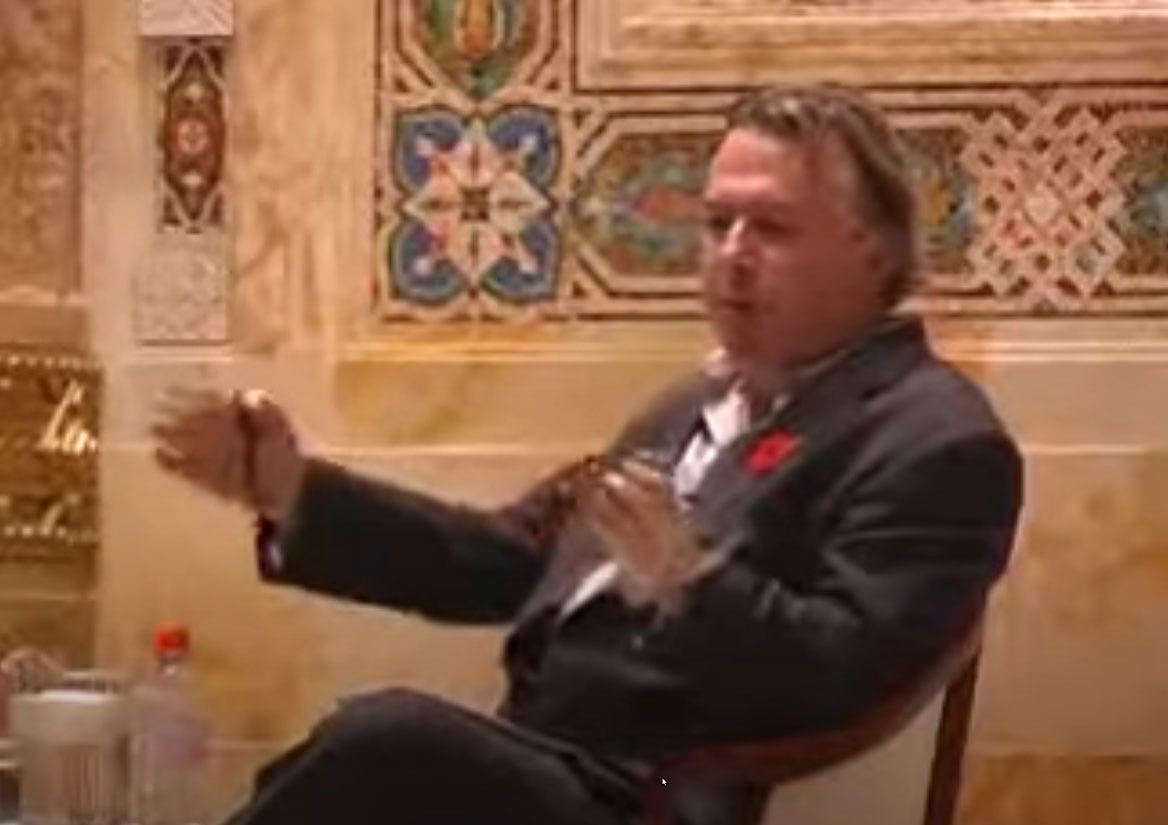
If you make the assumption that we are bodies, not just have bodies, then there isn't any mystery that remains to be explained about why a bleed in your brain will make you behave as if you weren't human anymore, unable to speak or think. The explanation is quite straightforward.

Date published: TBC
Hitchens argues that the faith mentality is twisted and immoral, with essential fanaticism and a fantasy of purity. He states that religion forces nice people to do unkind things and makes intelligent people say stupid things. The speaker questions whether it is good for the world to appeal to our credulity and not our skepticism, and whether it is good to worship a deity that takes sides in wars and human affairs.

Date published: TBC
Christopher Hitchens And Tariq Ramadan Debate. The fall of Christendom, once a term that extended across the world, is now only used historically or sarcastically. According to Durman McCullough's history of Christianity, it wasn't until 1914 when all the Christian empires of the world went to war with each other that Christendom truly ended. However, the Caliphate, the Muslim Caliphate, also came to an end due to its involvement in the war on the side of German, Austrian, and Hungarian imperialism.

Date published: TBC
Christopher Hitchens discusses the harmful effects of religion on society, using examples such as the sectarian violence in Belfast, Iraq, Beirut, and Bosnia, and the persecution of minority citizens in Bombay. He argues that religion exacerbates and deepens these issues, and that the religious impulse itself should be opposed and criticized. Hitchens maintains that those who hold secular views are open to argument and evidence, and should not be compared to religious fanatics.
Date: TBC
Thank you, Randy, for having me again. I have the impression that people like yourselves come to meetings like this not just to listen, but to talk. Since we only have 45 minutes together, I'll be as brief as I can on my topic and invite your responses. I think I must need to be
Date: October 16, 2006
Every restriction on expression prepares the ground for future repression. From Oliver Wendell Holmes to modern European thought-crime laws, he shows that the suppression of any opinion - however offensive - ultimately endangers all of them.
Date: TBC
A thought-provoking speech and debate sequence that delves into the merits and drawbacks of religious belief through a philosophical and ethical lens. Christopher, using sharp wit and critical reasoning, challenges the audience to reconsider the foundations of faith and the implications of divine design. He draws on historical examples, scientific insights, and theological critique to argue against the rationality of faith and the moral implications of religious dogma.
Date: TBC
If you make the assumption that we are bodies, not just have bodies, then there isn't any mystery that remains to be explained about why a bleed in your brain will make you behave as if you weren't human anymore, unable to speak or think. The explanation is quite straightforward.
Date: TBC
Hitchens argues that the faith mentality is twisted and immoral, with essential fanaticism and a fantasy of purity. He states that religion forces nice people to do unkind things and makes intelligent people say stupid things. The speaker questions whether it is good for the world to appeal to our credulity and not our skepticism, and whether it is good to worship a deity that takes sides in wars and human affairs.
Date: TBC
Christopher Hitchens And Tariq Ramadan Debate. The fall of Christendom, once a term that extended across the world, is now only used historically or sarcastically. According to Durman McCullough's history of Christianity, it wasn't until 1914 when all the Christian empires of the world went to war with each other that Christendom truly ended. However, the Caliphate, the Muslim Caliphate, also came to an end due to its involvement in the war on the side of German, Austrian, and Hungarian imperialism.
Date: TBC
Christopher Hitchens discusses the harmful effects of religion on society, using examples such as the sectarian violence in Belfast, Iraq, Beirut, and Bosnia, and the persecution of minority citizens in Bombay. He argues that religion exacerbates and deepens these issues, and that the religious impulse itself should be opposed and criticized. Hitchens maintains that those who hold secular views are open to argument and evidence, and should not be compared to religious fanatics.
